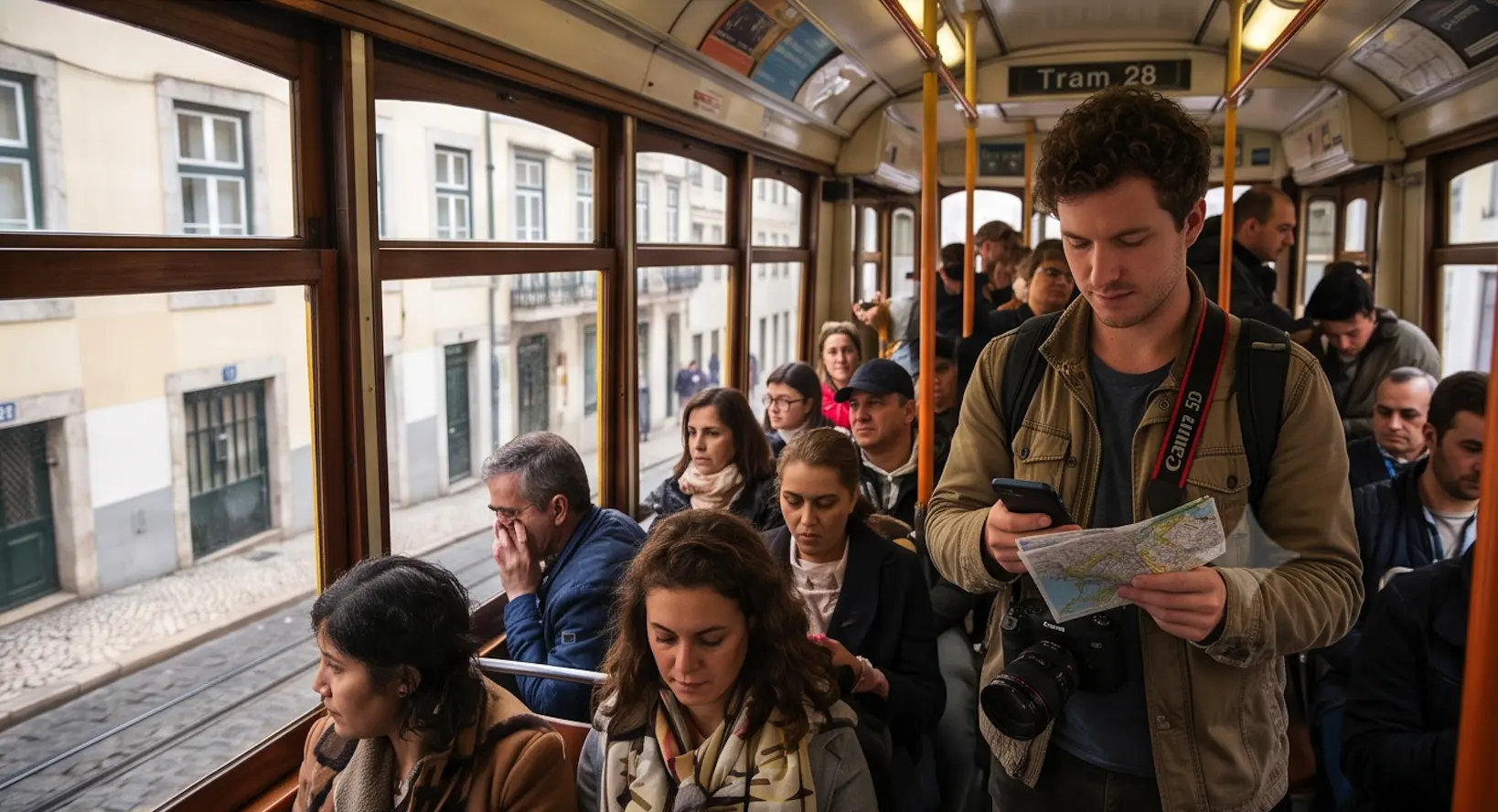
There are few things more intimidating for a traveler than standing in front of a sprawling subway map written entirely in a different alphabet, while hundreds of rushing commuters weave past you. Relying on taxis or Ubers is a surefire way to bleed your travel budget dry, and it isolates you from the heartbeat of a city. Public transportation is the circulatory system of a metropolis, and mastering it is a rite of passage for any serious traveler.
Whether you are trying to decipher the hyper-efficient web of the Tokyo Metro or figure out how to flag down a wildly colorful "Chicken Bus" in Central America, the principles of navigating foreign transit remain the same. Here is how to conquer public transport anywhere in the world.
1. The Holy Grail: Offline Transit Apps
Technology has completely revolutionized travel logistics. You should never step off a plane without having downloaded the necessary maps and transit apps for your destination. Google Maps is excellent, but it requires a constant data connection to calculate transit routes.
Instead, download apps that specialize in public transit routing and work offline. Citymapper is widely considered the gold standard for major global cities, offering step-by-step instructions, train times, and even telling you which subway car to board for the fastest exit. For trains in Europe, the Omio or Trainline apps are indispensable for booking and tracking cross-country routes.
"Do not wait until you are underground with zero cellular reception to figure out how many stops until you need to transfer."
2. Invest in the Local Smart Card Immediately
Almost every major city now utilizes a contactless smart card for its transit system (like the Oyster card in London, Suica in Tokyo, or the MetroCard in New York). Make purchasing this card your very first task upon arriving at the airport or central train station.
The Benefits
Why? First, paper tickets are often more expensive per ride. Second, fumbling with foreign coins at a ticket machine while a line forms behind you is highly stressful. A loaded smart card allows you to tap-and-go seamlessly, reducing friction and making you look like a local who knows exactly what they are doing. Many of these cards also work in local convenience stores and vending machines.
3. Observe and Mimic Local Etiquette
Every transit system has its own unwritten rules of behavior, and violating them is the fastest way to mark yourself as a clueless tourist. Take a moment to observe the locals before you jump on the train.
- The Escalator Rule: Is it stand on the right, walk on the left? Or vice versa? Watch the flow of traffic and follow suit.
- Volume Control: In cities like Tokyo or Taipei, talking on the phone or having loud conversations on the train is considered incredibly rude. In other cultures, vibrant conversations are the norm. Read the room.
- Backpacks: When boarding a crowded bus or subway car, always take off your backpack and hold it by your feet. Do not be the person knocking locals over with a giant trekking pack every time you turn around.
4. Embrace the Chaos of Informal Transit
In many parts of the developing world, formal transit maps do not exist. Instead, you'll rely on informal networks of shared minivans, tuk-tuks, or modified trucks (like songthaews in Thailand or daladalas in Tanzania).
These systems operate on organized chaos. The best way to navigate them is to ask a local—your hostel host or a shopkeeper—where to stand to catch a ride to your destination. Have your destination written down clearly on a piece of paper or saved on your phone screen to show the driver. Negotiate the fare *before* you get in, and sit back and enjoy the wildly unpredictable ride.
Getting lost is inevitable. You will take the wrong train going in the wrong direction at least once. Embrace it. Getting off at an unexpected station is often how you stumble upon the best, un-touristed neighborhoods a city has to offer.